Monday, November 16, 2020

When nature calls: Trail potty training for kids of all ages

Elf on the potty

When Nature Calls! 

There will be a time on the trail when someone needs to use the washroom. Many trails have designated areas that they have created for a makeshift privy. However, we can guarantee nature seems to call either before or after that point, so what do you do? Be prepared!

What you need to bring: Carrying biodegradable toilet paper is a necessity along with a shovel, wipes, and cornstarch (to get rid of the itch!). We also recommend young ladies carry feminine products just in case.

Where to go: Ideally, use the spots designated on the trail marked either as washroom/toilet/privy. These areas usually have a makeshift toilet and are much easier for a child to use. However, most children have to go when they have to go, so you need to first find a place where everyone can stop and you are able to drop your packs. This is one of the only times that you should ever go off-trail.

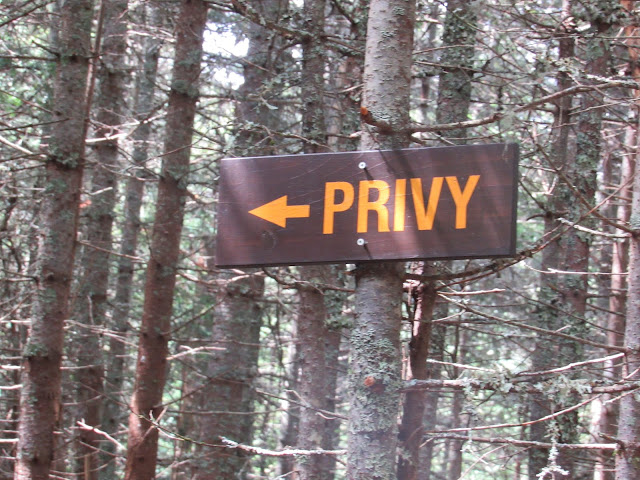
Privy sign in the Adirondacks

How to 'go' in the forest: You need to find a place where they can use a tree or stump to lean or sit over. Dig a hole as deep as the hand shovel. Younger children will need more help and may need you to hold them to go. Once they have gone ensure they have wiped properly to avoid any discomfort once back on the trail again.

How to avoid monkey butt: Applying corn starch or Monkey Butt can help ensure there is no chaffing after they have gone. Place the toilet paper in the hole as well (as long as it is biodegradable) and bury it along with the waste.  Use the wipes for hands to ensure they are clean (brings these back out with you). 

How to protect the forest: Try your best to not disturb too much off the trail. Do not bury the wipes or feminine products as they will not biodegrade like the toilet paper. Put them in your garbage bag to carry out all garbage (i.e. your snack garbage). 

How to plan ahead: Children tend to have a harder time going in the woods so it is important to go over this before you hit the trail. On trails far from home, it is best to stop at a coffee shop, gas station or another place with public washrooms to try to avoid going into the woods. 

Conclusion:

When nature calls make sure you are prepared with all the essentials.

Be respectful of trail rules, leave it like you found it. Bury waste that is biodegradable and bring out what is not.

Talk to your children ahead of time. Prepare them so they are not shy or scared. 

If your children need to go in the woods, make sure it's presented as 'no big deal' and a learning opportunity for taking care of the forest.


Monday, November 9, 2020

Lion's Head Trail: The perfect family hike in Ontario


Taking a break on top of Lion's Head

COVID-19 has created a lot of extra stress on families.  It is important to spend time as a family just having fun together and away from the mundane of everyday life.  A great way to spend time together as a family during the pandemic is to hike as a family.  It's a great way for both parents and children to put away their phones and to spend time outdoors while physically distancing from others.  

More people seem to be hiking during this pandemic than ever before, which is probably due to closures of so many activities.  And so the challenge has been to find the perfect hike, at the perfect time, and hope to have the perfect weather.  We have been avoiding the popular trails during the weekends and instead opting for 'hard to reach' trails during the weekend and then saving the more popular trails in the mornings during the week when the trails are typically not as busy.   

Although Lion's Head Loop Trail has been on our list for a day hike, we knew it was going to be busy so we went on a weekday when the weather report was gloomy, chilly with the potential for rain.  Our gamble paid off, as the weather kept others off the trail, the hike was unusually quiet, and we even had the sun come out during the hike!

The Lion's Head Trail is just north of Owen Sound and near Northern Bruce Peninsula, Ontario, Canada.  The trail is a 15.3km loop, which is part of the Bruce Trail.  The trail provides many breathtaking views from the cliffs, interesting Potholes,  a rock beach, and a diverse array of plants and trees along the trail. 
 
View from the cliffs at Lion's Head

The trail starts out with a short trek to the Potholes, which were formed by the Glaciers with pebbles caught under the ice and in the layers of the water.  As the ice moved, it would create a whirlpool and the pebbles swirled around and created these amazing Potholes.  Many people frequent this part of the trail so if you go during the busy times, you may not have much time to enjoy this amazing sight.

Entrance to the Potholes at Lion's Head


From the inside of the Potholes at Lion's Head

On the way to the potholes and look out there were wild Forget-me-nots and Trilliums that lined the trail. It was beautiful.

Forget-me-nots
Trilliums

Once you get past that area, you hike along the cliffs for at least 4km with areas that you can sit and enjoy the view of the lake.  Along the shore, the water is a beautiful turquoise colour.  

Views of the shoreline at Lion's Head

The cliffs in many areas are straight down and there are some cracks that you need to step over.  

Rock bridge on Lion's Head

The trail is very safe and we had no concerns.  But it is important that you stay on the trail and use common sense. 

Once you move away from the cliffs you make a bit of a decent and what seems like a quick turn around a corner(About the 6.5km point), you are on a beach covered in smooth stone from the lake.  It was a great place to have a break and enjoy some snacks.  

Enjoy a snack on the shore on Lion's Head Trail

This trail is well-marked and it is easy to follow.  In areas by the shore where there are fewer trees, there are these wonderful cairns to guide the way.

Cairn guiding the way

The trail then moves away from the lake and heads back into the forest,  lined with forget-me-nots and trilliums.

Trillium floor

The next section has some uphill but then levels off once on top of the cliffs.  

Back on the cliffs at Lion's Head

To finish the loop, we walked along a side trail towards the parking lot.  It was about 4.3 km from the reconnection point.  Part of this trail was obviously an old road which allowed us to walk side by side and chat.  It was great.  The sun was shining through the trees and on the flowers. 

Sun in the Trees

Conclusion

According to Alltrails.com, Lion's Head loop is rated as the most popular day hike in Ontario and it makes perfect sense to us why it is the most popular.  

Lion's Head can be extremely busy and overcrowded due to its popularity.  Avoid doing this trail on weekends and plan to complete the trail in the early morning or late afternoon to avoid the crowds.  

The sights are amazing, the trail is moderately difficult but not too demanding, and the trail is full of fun surprises.  It is a perfect trail for an extended day hike with the family.  It's a trail that is long enough to pack a lunch, but not too long that you have to worry about breakfast and dinner too!  If you are in Ontario, it is a "must hike trail".  

Sunday, November 1, 2020

Top 10 ways to keep the hiking trails safe during COVID-19 pandemic


Hope you are all safe and that you are getting the opportunity to get on the trails with your kids.  It's now more important than ever to get the kids off their phones and out of the house!  As people continue to flock to the trails in record numbers, there are some changes (besides closures) we need to consider to ensure we all remain safe and doing our part not to spread the virus while hiking.  We are in no way experts nor do we claim to be, and please follow guidelines set out by your governments and health authorities.  These are suggestions and common sense ideas for hiking during the COVID-19.  

1) Stay Active as a Family: While many of our favorite trails have been either closed or inaccessible due to travel restrictions, we have been using these times as opportunities to train for the trails as a family.   We developed a routine for jogging, strength training, and daily walks to be ready for the trails. It has been fun working out with the kids.  Being active strengthens our bodies and our family bond.  When one of us struggles with an exercise, everyone cheers them on.  We don't have all the gym equipment, so we developed stations, such as push-ups, squats, crunches, burpees, jumping jacks, wall sits, running up hills, etc.  Every day is different and it has been great on our bodies, minds, and spirits to remain trail-ready, even when we can't get to our favorite locations.

2) Respect Closures:  While it feels awful when your favorite trail is closed due to the pandemic, but you are taking a huge unnecessary risk by going on a closed trail.  You can get lost or hurt and nobody will be coming by to help.

3) Minimize Contact with Locals: Given that most hikes can take us hours from our homes, it is typical to stop in small towns for gas, food and to shop for local treasures.  But during the pandemic, you may be exposing people in these small towns to the virus.  While big cities may have the hospitals and support to assist people who have been infected with the virus, this is not always the case in smaller towns and so you may be creating even more risk for them.

4) Parking Lot Etiquette: The parking lots are often the busiest area of the trail, as some people getting ready to head out on the trail, while others return to the parking lot at the end of their hike.   Considering the parking lot can be hard to physically distance, wearing a mask provides protection for yourself and others.

5) Leave No Garbage: Take your garbage home with you!  Yes, there are usually garbage bins in parking areas, however, with the virus in mind, you don't want to be spreading the virus by touching communal objects like garbage binds.  We also need to do our part for keeping the staff safe by not increasing the risk of spreading the virus.

6) Leash Your Pets:  Most trails already have this rule in place for good reason, however, during the pandemic, it is more important than usual to keep your pet on a leash and in close proximity.  Your pet may be friendly and loves everyone, but your dog should be obeying the physical distancing rules and you are the only person to make sure your pet is not violating the space of others.  

7) Use Rest Areas with Caution:  Hiking is about the journey and the destination.  Resting at a lookout or a top of a mountain is part of the reward of the sweat (and sometimes tears) of making it to the destination.  But these spots can be busy and so you need to be respectful of others and the rules of physical distancing.  You need to be respectful of others so they have the same privilege.  Keep your gear, boots, and lunch in a contained space so you respect the space of others.  While it's a great time for children to explore, make sure they stay clear from other hiking parties to ensure social distancing. Also, make sure you bring your mask and use it if you are not able to distance in busier rest areas. 

8) Carry in/Carryout: All garbage leaves with you!  I know when we are hiking, in the past, any garbage we have seen, we have picked up and brought out with us.  In our packs, we have ziplock bags for exactly that.  However, during the virus, it is a high-risk activity to pick up the garbage of others unless you can do it without contact.  It's also a good time to mention my pet peeve about people who spit sunflower seeds on the trail....if you are infected with the virus, you are basically leaving a virus trail every time you spit your seeds.  And besides, we go hiking to get away from the virus, but there is nothing that can bring us back to reality than seeing a used dirty mask on the trail.

9) Nature Calls: Someone will inevitably need to use the washroom at some point in the trip and many of the toilets near trails may be off-limits.  Make sure everyone uses the facilities before leaving the house and before getting to the trail. When nature calls on the trail, use either the dig deep and bury method or even better take, carry the portable waste bags with you and bring it home with you.  Please move a fair distance off the trail if you will be using the dig deep and bury method and leave no trace as much as possible.

10) Hand Sanitizer and Personal Wipes: This is something that most likely you do anyway regardless of Coronavirus.  Carry hand sanitizer and wipes and use often (after touching common objects like benches, water fountains, pencil to sign-in to trails), and especially before touching food.  You will need to carry out the wipes, as many are not biodegradable. 

Bonus Item: Step Aside: Trail etiquette dictates that you step aside to let uphill hikers have the right of way.  While this is still the case, you need to also make sure you have sufficient distance to pass by at all times (including flat ground).  Use common sense to allow either party to pass with as much space as possible to help reduce the spread of the virus while enjoying the trails.  If you are going to move off the trail, be careful of the sensitive vegetation so that you don't do further damage to the forest floor.

When in doubt, use common sense to stay safe on the trails.  By not taking specific precautions you are putting yourself at risk and everybody around you.  Hiking is one of the few activities that we can still do while physically distancing... and we need to make sure we protect the sport and ourselves so we continue to have hiking as an option.  Feel free to share this blog with anybody you think needs a refresher course on trail etiquette during the pandemic.  And as always, we would love to hear from you.  What has been your experience while on the trails during the pandemic?  


Monday, June 8, 2020

Making positive family hiking narratives


Beyond the constraints of obligations, electronic devices and large social networks that pull families apart in different directions, hiking and spending time on the trails provide families with the opportunity to spend uninterrupted time together and to create positive and lifelong memories.  

Hiking with children allows parents the opportunity to pass on experiences that capture central values for family life and well-being, which can be realized by their children as they grow older and can pass to future generations.

Positive shared memories and important family narratives of belonging and are instilled during the hiking trip. The shared experiences of sunrises, views from the top of mountains, taking shelter in rainstorms, traveling to new hiking trails, learning about animals and following tracks, and spending time together in real-time will have lasting effects long after you have reached your destination for that specific journey. 


Families can lose their bearings, especially when children spend too much time in structures activities, in their rooms, on their phones, tuned out of the family and when parents become too busy in the daily activities that they end up ignoring the importance of spending time with their children in unstructured and spontaneous fun. 

Hiking and spending time outdoors provides families with the unstructured opportunity to connect without the distractions of daily life.  

While on the trail, families can experience a sense of presence, even though each family may have different patterns of hiking (children sometimes run in front eager to get there, sometimes slowly follow their parents, or each parent walks with one child, or they all walk as a unit holding hands).  Hiking is so much more than just walking.  Its also stopping for breaks, taking family pictures, talking on the trail, having lunch together, enjoying the view, playing games, singing, bird watching, etc.

Remembring and talking about the events provides another opportunity to strengthen the family narrative and to benefit from these experiences.  Watching a slideshow of the pictures of a trip or talking about the points to remember can help to concretize these experiences deep in the memory bank and provide children with deep feelings of connections and positive sense of self and family, which will help to create strong, resilient and passionate young adults.  

When parents and the children communicate about their travels and time spent together by asking each other questions about the experiences on hiking trips (e.g. do you remember when we saw the moose?), we create shared narratives, shared stories, and an overall sense of belonging and connection. 


To recount stories that occurred on the trail is about creating a shared family narrative and a sense of family identity.

As families tell their stories to each other,  the use of the "we" can connect the family as active participants in the storyline.  As family members talk about the family as a unite, the family begins to talk with a shared understanding, a common experience, and a joint sense of connection and meaning that gives a sense of closeness. 


By sharing experiences of their existence, the parents believe that they are giving their children a lifelong gift. Through this gift the parents implant their experiences into their children’s memory, thus creating continuity based on their belief that the children will evoke these memories later in life.


Wednesday, January 1, 2020

2020 First Snowshoeing Adventure


Happy New Year!  We have been quiet during the last couple of months because we have been busy with our kids' hockey.  Although we took some time off from blogging, we have been planning our next big adventures for 2020 and we look forward to sharing these with you in the coming months.  We also have a number of tips for hiking with children that we have been working on.  And now with our new found love of snowshoeing, we expect that we will be updating the blog throughout the year.

Rather than wait until the spring to begin hiking as a family again, we decided to try snowshoeing.  We picked January 1, 2020, as the date of our first snowshoeing adventure so we could accomplish the first hike of the year and to set the stage for a very active year in the outdoors.


The temperature in Toronto has been extremely mild and there has been no snow on the ground so we needed to travel up north to Algonquin Park where we were welcomed by cooler temperatures and opportunities to experience the enjoyment of winter in the outdoors.


The temperature was fantastic (- 4 C) with mostly cloudy, but the sun did peek out several times during our five-hour adventure.


We have completed the Track and Tower trail in Algonquin Park almost yearly since the children were babies, but we have never experienced the trail in the snow.  The blue trail markers were easy to locate and the trail was clearly marked throughout.  We did see a couple other parties snowshoeing the trails and this also helped with a clearly marked passage.


The trail took us a lot longer to complete than in the summer, but mostly because we stopped frequently to take pictures of the snow-covered scenery and to soak in the amazing views.


The fresh snowfall made the trail clean and crisp.  A winter perspective on the trail made it feel like a new adventure on a familiar trek.


Familiar trees and landscapes look different when covered in snow and it provided a lot of opportunities for comparing and contrasting the trail across the different seasons.


With the extra exertion of snowshoeing, we make sure we make frequent breaks and that the children refueled with energy snacks along the way.  We also brought our camelbacks with water to ensure everyone hydrated.  Because the temperature is colder, the desire to hydrate was not as strong even though our bodies still required to be hydrated.


Ascending to the top of the lookout seemed easier than in the summer because our crampons gave us extra traction in the snow and seemed to give us the extra grip to make the trip.


There are many places along the trail to take a break.  This section of the trail (#10) is just before the long stretch back so it is a perfect place to take a break and marvel in the old railway bed and bridge.


The trail offers a number of spots with beautiful ice sculptors that are shaped around the rock cuts.  This trail is particularly spectacular because a portion of the trail follows a previous 1900's railway cut out from the Canadian Shield, so the frozen rock drips are both plentiful and spectacular and offered a completely different look in the winter. 


Family Peak Seekers' first hike of 2020!!!!!


Tuesday, October 22, 2019

Packing the first aid supplies to handle the most common problems on the trail


Supplies for a family day hike


There are several great first aid kits on the market designed specifically for hiking. Most of these first aid kits are great starters to be ready for minor medical issues on the trail. However, there are several additional items that should be added to your pack to ensure you are prepared for most situations when hiking with children.

Pain relief: Many kits contain either Tylenol or Advil, but usually only for one or two adults. Consider the number of hikers in your group and the age of the hikers. It is good to include additional pain relief medication that is age-appropriate (e.g. children's Tylenol) in case children complain of headaches or pains while on the trail (Note: before you give you child medication, the headache may be a sign of dehydration or hunger so always best to investigate the source of the headache). If you would rather not give your children medication, there are some wonderful homeopathic pain relief items you can bring instead.

Splint/Stabilizer: All though you may never need it, on long hikes or backpacking trips you may consider how to create a saint. There are several items you probably already carry that can be used as a brace. Hiking poles and tent poles can be used as a splint. You will need to use a soft layer against the skin like a puffy coat or a long sleeve shirt and something like rope or gauze bandages to hold the saint in place. Here is a great article that describes how to set a splint in the backcountry.

Sun protection/sunburn relief: Bringing sunscreen on even a cloudy day is essential. Although you may seem protected in the tree cover, the sun can penetrate the canopy. Once you are above the tree line, you are fully exposed to the sun. As we all know the sun has become much more intense over the years and can burn skin a lot quicker. Besides the pain of a sunburn, heat exhaustion, dehydration and heatstroke you need to consider. Apply sunscreen before you begin your hike especially to children. Avoid putting it on their forehead and hands so it does not run into their eyes or they don't rub it into their eyes or mouth. A hat to protect their forehead and eyes is best. A special hiking hat they have picked out usually gets them to wear it. Reapply sunscreen according to the instructions or if it has been washed away by rain or a dip in the water. You may also wish to reapply above the tree line for good measure.

Bug spray: Ah bugs spray. This should be brought on all hiking trips. Black flies, mosquitoes, deer flies and horse flies are the most common biting insects you may encounter. The most effective bug sprays contain Deet with different % levels. Usually the higher the Deet the more effective in repelling insects, however, use caution when using Deet.

There are repellents that do not contain Deet that can be effective. 

Another consideration is not mixing insect repellent brands. Although their purpose is the same their chemical make up is different and may have a chemical reaction on the skin which can cause a burn. Avoid getting insect repellent in eyes or on open wounds as it will sting.

Insect sting relief: Carrying items to relieve insect bites and stings may ensure you are able to continue your hike. After bite is one common insect relief product that comes in kids' safe and adult versions. Simply apply to the affected area to relieve the itching. Another treatment is hydrocortisone you can also purchase at a pharmacy that helps relieve the itching. Benadryl can also help, however, I would suggest that it is administered after you have completed hiking for the day as it may cause drowsiness or a hyper state which both are not conducive to hiking.

Poison ivy/poison oak treatment: Poison ivy, oak or sumac are all possibilities while hiking. Leaves of three, let it be is a good guideline, however sometimes it is hidden. It is the oil of the plant that causes the reaction that is why even if it gets on clothes it can be transferred to the skin. Avoid scratching the area and the oil can be transferred to your fingers and spread to other areas of the body. 

Antihistamine to treat allergic reactions: Allergy medications is extremely important to carry especially if someone in your group has known allergies. An unexpected allergic reaction can happen at any time and over the counter medication is usually very effective. Ensure you bring nondrowsy and age-appropriate. If someone experiences an unknown allergy and is causing distress call 911 and follow the dispatcher's instructions before giving any medication.

Prescription medications (e.g., antibiotics): Carry all medications with you on a hike: a venting, antibiotics, diabetic supplies, and any other medication that would cause serious issues if missed. Getting lost is not expected but if someone in your group has a medical condition that is dependant on medication, carry it with you on your hike. Better safe than sorry.

Injectable epinephrine (for severe allergic reactions): For those with severe allergies that an epic-pen is required to carry it at all times. Even if the allergen may not be a possibility, you never know if another hiker had the allergic on the trail and you come in contact with it. Other allergic reactions may become more severe and an epi-pen may need to be administered before you reach medical help. Do not administer an epic-pen if the reaction is not severe or if you are unsure if it is an allergic reaction. Seek medical help if a hiker becomes in distress.

Blister repair: Many first aid kits contain minimal blister relief, however, it is usually for one or two blisters at most. Adding Moleskin and or second skin to your kit will ensure you have enough to go around. We recommend the sheets of moleskin and scissors to cut to the appropriate size required. We have found that the pre-cut moleskin does not always cover a larger hotspot and is less adhesive and thinner than the sheets. (Note: it is also important to investigate the source of the hotspot, such as the quality of the boots, wet socks that are creating friction, etc.).

Steri strips: Most kits do not contain steri strips. Steri strips are used to close a cut that may require stitches. If someone happens to slip on a rock and cuts their skin, it may be a while before you can seek medical attention. Steri strips can be used when a cut may require stitches so that you can close the cut and stop the bleeding until you are able to get medical help.

Larger pieces of gauze: Most kits contain a few small pieces. Carry a few larger pieces just in case. This can help to cover a large scrape so that dirt does not get into the cut. Large pieces of gauze can also be used to clean a wound, without further contaminating the spot until you are able to better clean the wound once off the trail.

Hand sanitizer: There are no handwashing stations on a hike so carrying a small bottle of hand sanitizer to ensure your hands are clean before eating a snack is extremely recommended. It may also be used to sanitize other items as well. In a pinch, you could use it to clean a wound if you do not have antiseptic wipes.

Tweezers: For removing splinters, ticks, and removing debris from wounds.

Cornstarch/Monkey Butt: Cornstarch is not just for baking! It can also act as a drying agent to reduce friction on hotspots. These products can be used on all parts of the body including feet, armpits, thighs, and yes your children's butt. Heat and friction can create raw irritation so body parts (this is especially a concern for children who do not properly wipe their bums before going on a hike, causing them discomfort, itching, and pain. Applying a drying agent will reduce the discomfort and stop the itching.

Diarrhea medication: The all familiar pink Pepto tabs may come in handy while out on the trail. The last meal you ate, the water you drank, heatstroke, IBS for whatever the reason diarrhea creeps up on a hiker in your group. Carrying diarrhea medication may come in handy. Diarrhea can cause dehydration and extreme discomfort so getting it under control as quickly as possible is important. You can get several types of medication for diarrhea or constipation which can also cause extreme discomfort.

Feminine hygiene products: This is a must in your first aid pack even if you have no females in your hiking group. Obviously, if hiking with females having an emergency supply of feminine hygiene products as it can come on without notice at times can be a hike saver. However, feminine hygiene protects can also be used as a medical supply to control bleeding. It is very absorbent so if someone gets a cut and doesn't seem to stop bleeding a feminine hygiene product can be used to get control of the bleeding.

Chapstick: Dry chapped lips are uncomfortable and can crack and bleed. A neutral-flavored chapstick will help. Children can carry their own chapstick while on the trail so they can apply it whenever they feel their lips feel dry.

Water treatment tablets: Although you feel you have enough hydration for the trip, it is better to carrying water treatment tabs just in case. Your filter may clog, you forgot the filter, you don't have a life straw, you split your water, whatever the case you need water and filtering is not an option. Carrying these small tabs to add to the water to make it drinkable can be life-saving and take up very little room.

Firestarter supplies: If the weather turns on you or you get lost and you are unable to complete the trail, sometimes you will need to hang tight for a while (waiting for the rain to stop or until the morning light). Starting a fire to keep warm for the night might be necessary. Another reason for starting a fire maybe because you need to boil water if there isn’t a clean water source or if your filters are not doing their job. There are times when boiling water may be your only option to stay hydrated.

Warming blankets: These are usually in hikers medical kits but not enough for everyone in your hiking party. These are the blankets that look like tin foil. They help retain heat. An unexpected night in the bush should always be anticipated.

Small notepad with a waterproof pen: A waterproof pen and note pad can be used for several things. Taking notes about the trail or animals you say, but it can also come in handy in case of an emergency. Taking notes of landmarks you saw if you are lost, keeping track of a person who is injured condition, or using a few sheets to help start a fire are all reasons to carry this along with you.

Conclusion

Let's hope you never have to use it, however, you should always be prepared in case the supplies are needed.

The standard stock first aid kits are a great start but we recommend adding enough items for everyone in your party and to make sure you bring special supplies for your children.

Sunburn relief may be something you wish to carry as well. Some people burn extremely easily or you may have forgotten to apply sunscreen. Having burn relief can come in hand. You can get the aloe-based creams or wipes that you can keep in your first aid supplies. It is essential to check these items before heading out to ensure you have enough for everyone in your party and that it has not expired or degraded due to exposure to heat.

A sting is treated a little differently depending on the number of stings acquired. For a few things, some natural techniques will provide some relief. A copper pen placed on the sting site, aloe, and ice all provide some relief. If someone has sustained several stings it is best to seek medical attention. Allergy medication also can provide some relief.

Setting out on any trail requires preparation. A fully stocked first-aid kit is one of the most important items you must carry.


Tuesday, October 1, 2019

Kids on crack! The hidden gem in Killarney Provincial Park

Kids on Crack!

Welcome to the hidden gem close to Sudbury Ontario on the North Shore of Georgian Bay.  The Killarney Provincial Park offers a unique family adventure with camping, canoeing and hiking trails, including peak seeking. 

Accommodations


The campground contains electrical and non electrical sites and well as 6 heated Yerts you can rent.  We usually bring our trailer with us.  Most sites are both large and private.  You can find more information about the Killarney Provincial Park on their website.   If you don't want to stay at the campground the town of Killarney has a few hotels and the city of Sudbury is not too far away.


La Cloche Silhouette Trail (7-10 days)


This is a 78 km or 48 mile backpacking loop.  The trail head starts at one side of the provincial parks and completes the loop at the other side of the park.  It contains may unique features along the loop including quartzite peaks of the La Cloche Mountain range.  the complete the full loop, it generally takes 7-10 to complete and there are some spectacular campsites along the way.


We completed this trail in our early 20's and loved it.  We plan on doing it again with our children.  However you do not have to do the entire loop to enjoy the trail.  You can do day hikes from the campground as in and out trails.  Just make sure you give yourself enough time to get back to your campsite by retraining your steps back.

Silver Peak (Full day)

Silver Peak does not disappoint.  Silver Peak is 539 metres in elevation.  The granitized rock stands out in the sea of forest.  Cliffs, rock formations and the shores of Georgian Bay are stunning.

The best (and most adventurous for children) to climb to the top of Silver Peak is to enter at Bell Lake by canoe (you can rent these at the lake at the Killarney Outfitters).  Once you get in your canoe, you will see Silver Peak in the distance and so you just canoe towards it for approximately 3 kilometres.  


Silver Peak in the distance
After 3 km of canoeing, you will see a wooden dock near the base of the mountain.  This dock is used to exit the canoes and join up to the Silver Peak trail by foot.  But before leaving your canoe, make sure you lift it to higher ground and flip it over so everything stays dry (paddles, life jackets).


Posing in front of canoes before making trip to Silver Peak

The hike up to Silver Peak is 5.5 kilometres one way so you will want to give yourself plenty of time to get back down as you will still need to canoe back to the outfitters before they close up shop for the night.

Once on the trail, it starts off fairly flat.  The trail is wide (also used for portaging) and easy to hike.  This hike would be spectacular to do in the fall with all of the different colours (on our bucket list of fall hikes!). This part of the trail provides passes through a number of wetlands and hardwood forests and is a great plate to view a variety of wildflowers and ferns. 


Making our way up to Silver Peak


The last hour of the trail is steep and strenuous.  We went fairly slow through this part and took a lot of breaks to catch our breath. On rainy days, this part of the trail could be tricky with slick rocks and loose footing.  Although at times challenging, the strain is worth it once you reach the peak!


At the top of Silver Peak

The top of Silver Peak is memorable.  Although not huge in elevation compared to other mountain ranges, the views are just as spectacular (and arguably more impressive because the views become less clear once you get higher in elevation).  The La Cloche Mountain range is over 2 billion years old and the white quartzite is perhaps the most recognizable feature of the peak as you are fully surrounded by this amazing plateau of white rocks.  


Depending on the year, the peak can provide a great opportunity to pick blueberries.  We filled two water containers of blueberries in a very short time, which we used for blueberry pancakes the next morning).


Picking blueberries 

The Crack (4-6 hours)


The Crack is an 11 km in-out trail, which takes about 6 hours with children (stopping at the top to pick blueberries).  The beginning of the trail is relatively easy with some ups and downs.  Nothing too technical in the early parts of the trail.  Once you get onto the Crack, this section has a split creating a large crevasse.  The crevasse is steep with jagged rocks and is the trickiest part of this hike.  The children in this section stayed close so we could all assist each other up.   


Once you reach the top of the Crack you are treated to a remarkable view and feeling of accomplishment.  The granitized rock is beautiful.  


The views from the top of the Crack is spectacular with views of hardwood forests, white granite rocks and teal blue lakes.  The colour contrast is remarkable and will have you wanting to come back as the pictures will never be able to capture it. 


The White Quartz Ridge was remarkable

Cairn of white granite

Conclusion


Killarney Provincial Park does not disappoint.  The hiking is spectacular and provides wonderful opportunities to complete day hike in combination with canoeing, scramble up a giant crack in the mountain and challenge the family to a longer 7 day hike.  The peaks are breathtaking, the camping is relaxing and the overall scenery is breathtaking.  Who would have thought a mountain range near Sudbury Ontario would be so amazing! 

Added bonus: Make sure you go into the town of Killarney where you can purchase the most amazing fish and chips from the docks of Georgian Bay. Herbert Fisheries is by far an added bonus on this trip and great for a long day hike.